
Key Takeaways
- Dry eyes and contact lenses can conflict, but the right lens material can make a real difference.
- Silicone hydrogel and scleral lenses help support moisture and comfort throughout the day.
- Daily disposables reduce buildup that can worsen dryness.
- Therapeutic drops paired with the right lens can improve comfort significantly.
- Our team tailors lens and drop combinations to each person’s dry eye needs.
If your eyes feel gritty, red, or tired by midday, your contact lenses may be part of the problem. Lenses sit directly on the tear film, and for eyes that already struggle to stay moist, that added layer can reduce surface hydration and leave you reaching for drops before lunch. Eyes on Weston sees this pattern regularly, and our team knows that the right lens choice can shift the experience completely.
The good news is that the right lens can change the experience entirely. Lens materials have come a long way, and there are now options designed specifically to work with your tear film rather than against it. Knowing what to look for makes it much easier to find a lens that fits your eyes and your day.
What to Look for in a Contact Lens for Dry Eyes
Lens Material Matters
Not all lenses are made the same way, and the material affects how your eyes feel after a few hours of wear. Silicone hydrogel is one of the more widely recommended materials for dry eye because it allows more oxygen to reach the eye’s surface. More oxygen means the eye can maintain a healthier, more comfortable environment throughout the day.
This matters more than people often realize. A lens that limits oxygen flow can cause your eyes to feel strained and dry by mid-afternoon, even if the fit is technically correct. The type of lens material you wear has a direct effect on how well your tear film holds up across the day.
Daily vs. Replacement Lenses
Daily disposable lenses start fresh every morning, which means no protein or deposit buildup that accumulates over weeks of wear. That buildup is a common reason lenses feel increasingly uncomfortable as the month goes on.
Replacement lenses aren’t off the table, though. Some replacement options incorporate moisture technology that holds up well over extended wear. The right choice depends on your lifestyle, how your eyes respond, and what your eye doctor recommends based on your specific dry eye pattern.
Contact Lens Options for Dry Eyes
Daily Disposable Lenses
Two daily options that our team carries are worth knowing about if dryness is your main concern:
- Alcon Dailies Total1: Features a water gradient surface where the outermost layer reaches nearly 100% water content. This creates a cushion of moisture between the lens and your eyelid, which can reduce friction and end-of-day discomfort.
- Acuvue Oasys Max 1-Day: Designed to work with your natural tear film and filters certain wavelengths of light, making it a practical choice if you spend long hours in front of a screen.
Replacement Lenses
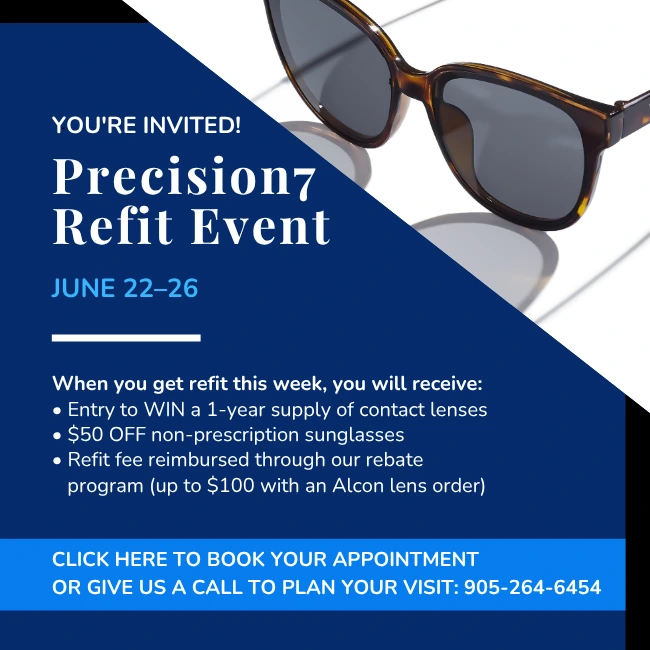
For those who prefer a replacement option, Alcon Precision 7 is a weekly replacement lens formulated to help retain moisture for up to 16 hours. It’s a practical choice when daily lenses aren’t the right fit for your routine.
Scleral Lenses
Scleral lenses take a different approach altogether. Instead of resting on the cornea, they vault over it and create a fluid reservoir between the lens and the eye’s surface. That reservoir stays in contact with the eye all day, providing consistent hydration that standard soft lenses can’t replicate.
These lenses are particularly well-suited for moderate to severe dry eye, where everyday soft lenses no longer provide adequate relief.
Our Approach to Dry Eye and Contact Lens Comfort
Dry eye isn’t the same for every person. The pattern, severity, and daily experience vary, which is why a one-size approach rarely works well.
Rather than defaulting to a standard recommendation, we select the most adaptable lenses and pair them with therapeutic drop combinations tailored to each person’s needs. The goal is visual comfort that fits your daily life, whether that means long hours at a screen, an active lifestyle, or managing chronic dry eye alongside other health factors.
Everyday Habits That Support Comfortable Lens Wear
Even the right lens works better when paired with a few simple habits.
- Use preservative-free rewetting drops throughout the day. Preservatives in some drop formulas can irritate eyes over time, so preservative-free options are generally gentler for regular use.
- Follow the 20-20-20 rule during screen time. For every 20 minutes of screen use, look at something 20 feet away for 20 seconds. Blinking slows down when you focus on a screen, and this short break helps reset your tear film.
- Stay hydrated, take omega-3 supplements and pay attention to indoor air quality. Dry indoor air from heating or air conditioning can reduce tear production even when your lenses are doing everything right.
Small adjustments can make a meaningful difference in how your eyes feel by the end of the day.
Find the Right Lens for Your Eyes
Dry eyes don’t have to mean giving up on contact lenses. With the right material, the right wear schedule, and a treatment plan tailored to your needs, comfortable lens wear is a realistic goal for most people.
Eyes on Weston serves families across Vaughan and the York region, and our team is ready to help you find a contact lens solution that fits your eyes and your life. Reach out to book a contact lens fitting with an eye doctor in Vaughan who takes dry eye seriously.