Key Takeaways
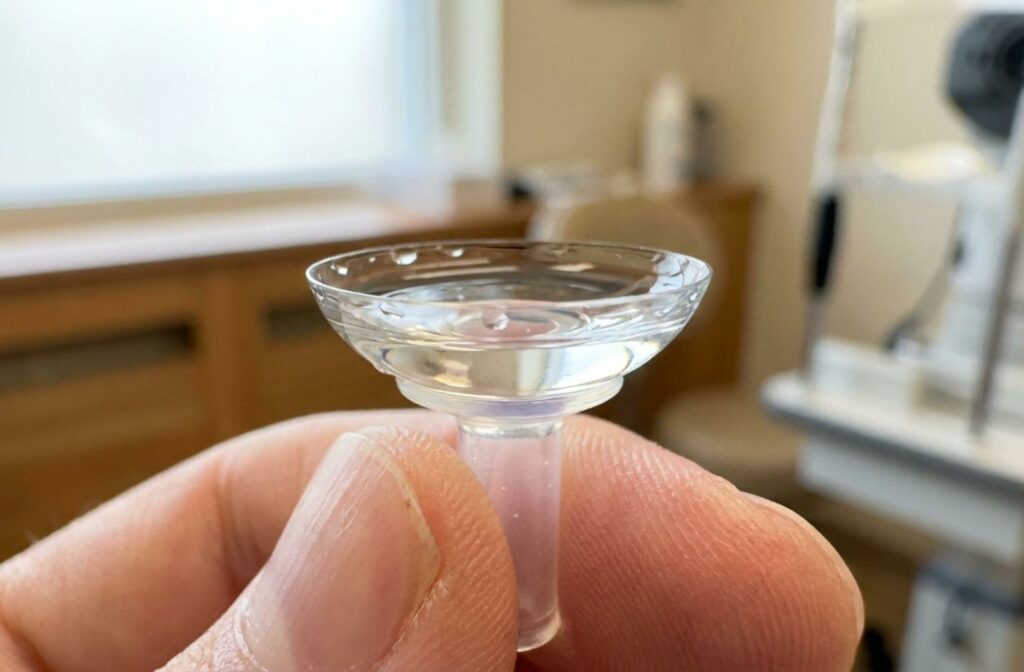
- Scleral lenses are large, rigid contact lenses that vault over the cornea and rest on the white of the eye.
- They hold saline solution against the eye, keeping it constantly hydrated .
- They can help people with irregular corneas, dry eyes, or post-surgical eyes.
- Each lens is custom-fitted to your eye’s measurements.
- Coverage varies by insurance plan and is not an OHIP-covered service, so it’s worth asking your eye doctor about your situation.
A Different Kind of Contact Lens
Most contact lenses sit directly on the cornea, the clear dome at the front of your eye. For some people, that’s uncomfortable or simply not possible. If you’ve tried standard contacts and found them painful, blurry, or impossible to wear for long, you’re not alone, and there may be a better option.
Scleral lenses are large, rigid contact lenses that vault completely over the cornea and rest on the white part of the eye, called the sclera. Because they never touch the cornea directly, they can offer clearer, more comfortable vision in some situations.
At Eyes on Weston, we offer scleral lenses as part of our broader specialty contact lens services for families in Vaughan and the York region. If you’re wondering whether scleral lenses might work for you, a comprehensive eye exam is the right place to start.
Who Scleral Lenses Are For
Eye Conditions That Make Regular Lenses Uncomfortable
Scleral lenses aren’t for everyone, but for the right person, they can make a meaningful difference in vision clarity and comfort. Scleral lenses are often recommended when the surface of the eye is irregular, sensitive, or has changed because of surgery.
Your eye doctor may suggest scleral lenses if you have any of the following:
- Keratoconus or other conditions that change the shape of the cornea
- Chronic dry eye or a sensitive ocular surface that gets irritated by standard lenses
- Eyes that have changed after surgery such as LASIK, PRK, or a corneal transplant
For those managing chronic dry eye, scleral lenses can be particularly helpful. This is because the saline reservoir between the lens and your cornea keeps the surface of your eye hydrated during the day.
Can Children Wear Scleral Lenses?
In some cases, yes, children with high prescriptions or dry eye conditions may be good candidates for scleral lenses. A thorough children’s eye exam can help determine what’s appropriate for your child’s age, eye health, and daily routine.
The Fitting Process at an Eye Doctor in Vaughan
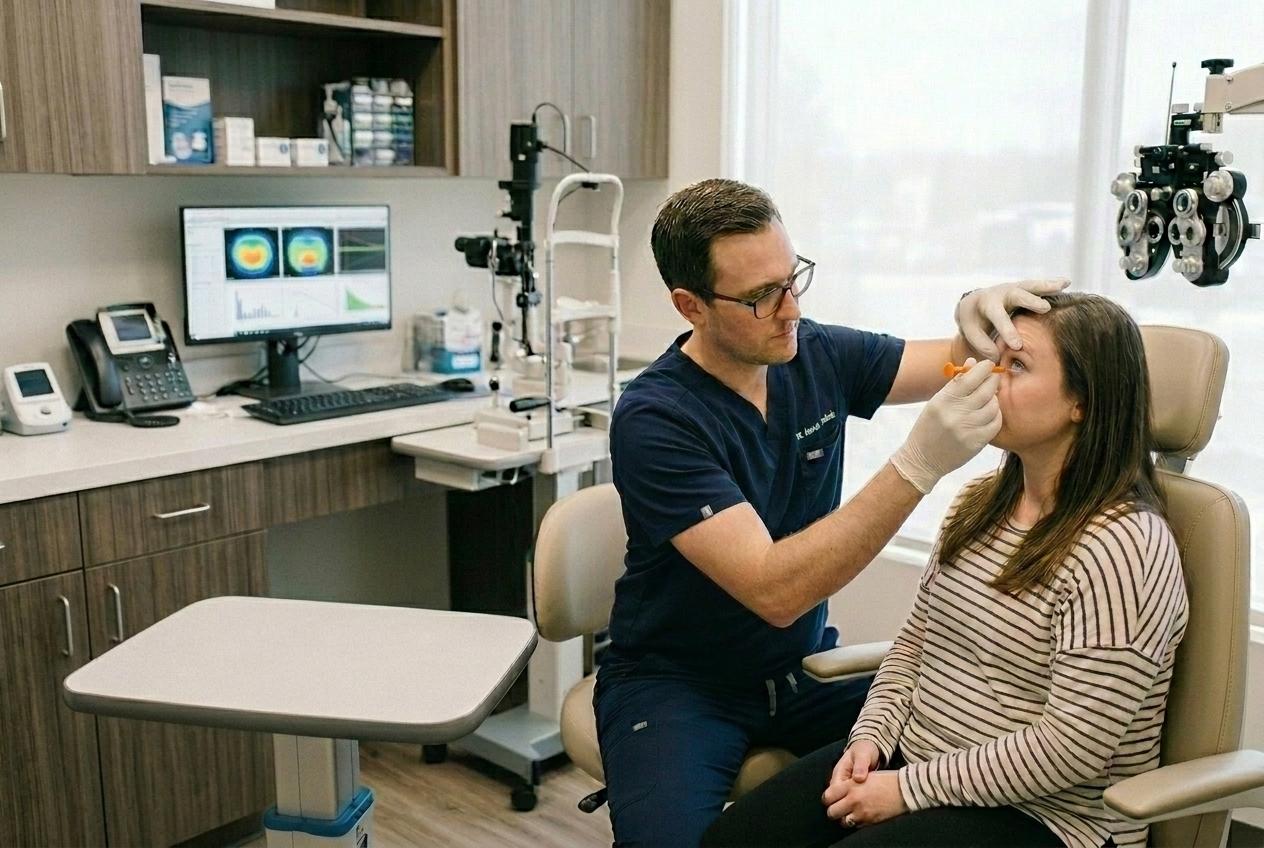
Getting fitted for scleral lenses takes more than a standard contact lens check. The process starts with corneal mapping, a detailed scan that measures the shape and surface of your eyes. That data guides your eye doctor in determining what size and shape of lens you’ll need.
From there, you’ll try on a set of diagnostic lenses during your appointment. This lets your eye doctor observe how the lens sits on your eye, helps them check for proper clearance over the cornea, and allows them to make any adjustments that might be needed.
Your lenses will be designed to match the size and shape of your eyes, not pulled from a general inventory.
Wear, Care, and Getting Used to Scleral Lenses
How to Insert Them
Scleral lenses require a slightly different approach than standard contacts, but most people get comfortable with the process quickly. Here’s how insertion typically works:
- Fill the lens with saline solution.
- Tilt your head forward and place the lens directly onto your eye.
- Check for air bubbles under the lens. If you notice any, remove the lens and try again.
Daily Wear and Lens Life
Most scleral lens wearers gradually build up to wearing them for ten or more hours a day. The adjustment period varies from person to person, but your eye doctor can guide you through it. Here’s what you should know:
- Lenses typically last one to two years with proper care.
- Use only the solutions your eye doctor recommends.
- Never rinse or store lenses in tap water, as this can introduce harmful microorganisms.
Proper lens care makes a real difference in how long your lenses last and how comfortable they feel.
Costs, Coverage, and Questions for Your Eye Doctor
Scleral lenses are a specialty contact lens option, and their cost reflects the custom fitting and manufacturing involved. What you pay out of pocket depends largely on your insurance plan and why the lenses are being prescribed.
Insurance coverage can vary widely, and each plan handles specialty contact lenses differently. Some plans may cover fitting appointments, some may contribute to the cost of the lenses, and others may not provide coverage.
Because coverage depends on your individual insurance plan, we recommend contacting your insurance provider directly to confirm what is included and what out-of-pocket costs you may be responsible for. At Eyes on Weston, our team takes the time to walk through your situation during our specialty contact lens consultation, so that you know what to expect, both clinically and financially. To learn whether scleral lenses are a good fit for your eyes, book a comprehensive eye exam with Eyes on Weston in Vaughan today.